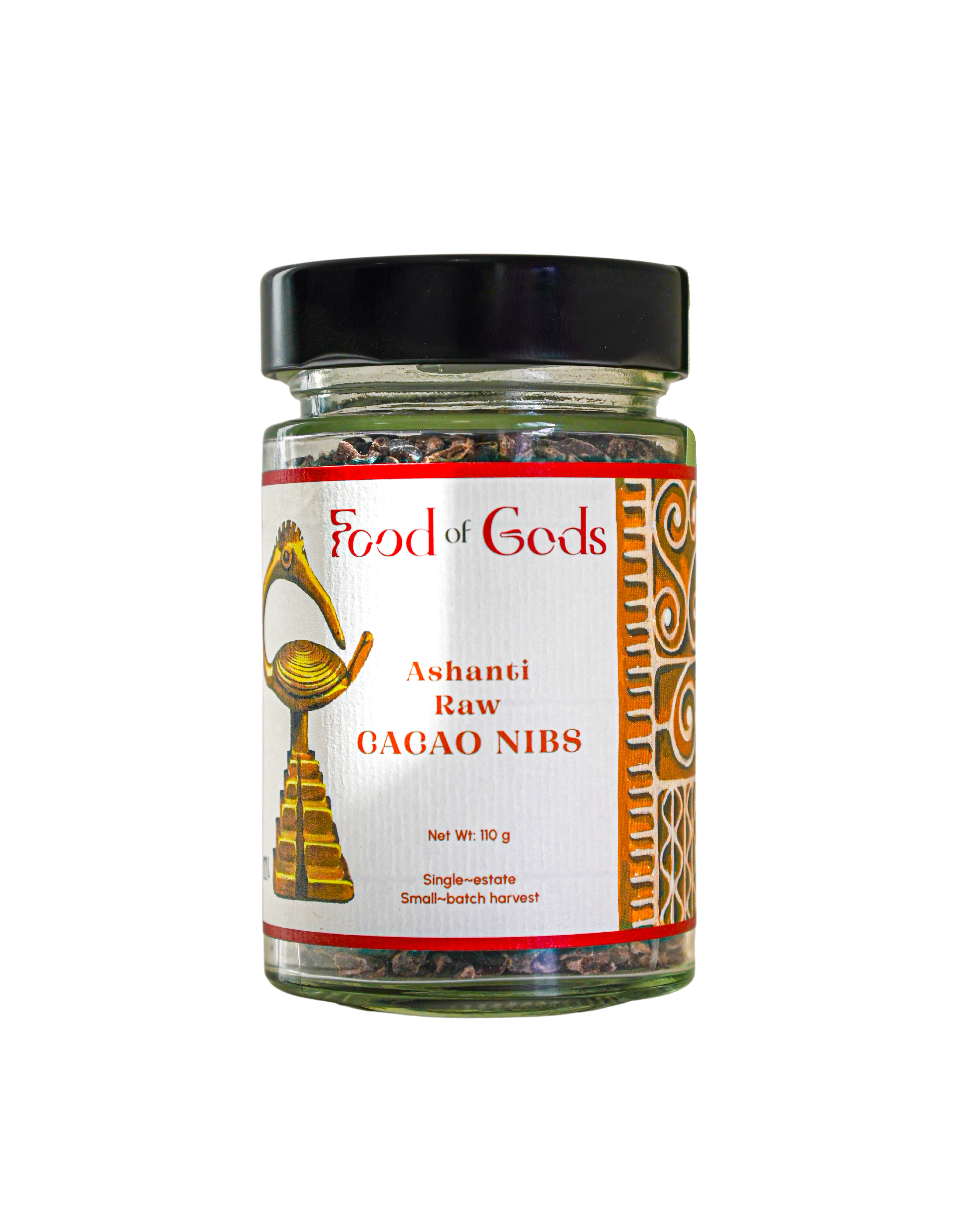
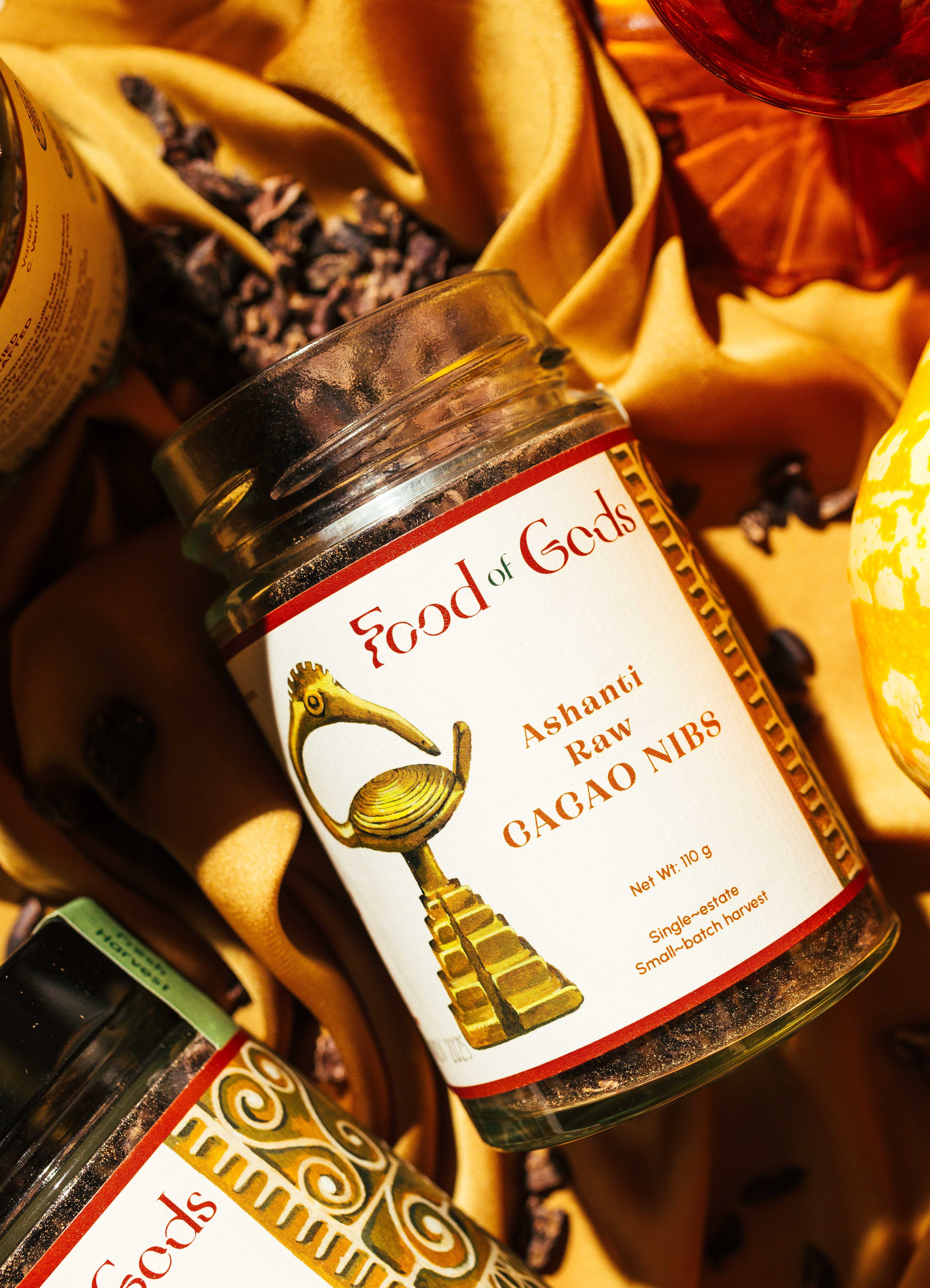


阿散蒂“生”可可豆粒
110g

- Description
- Biodiversity
- Harvest Year
我们的生可可粒只是在热带阳光下晒干的可可豆碎片。 它是生的——意思是未加工的,充满可可脂!它是浓郁的黄油味,带有苦涩和泥土的味道。
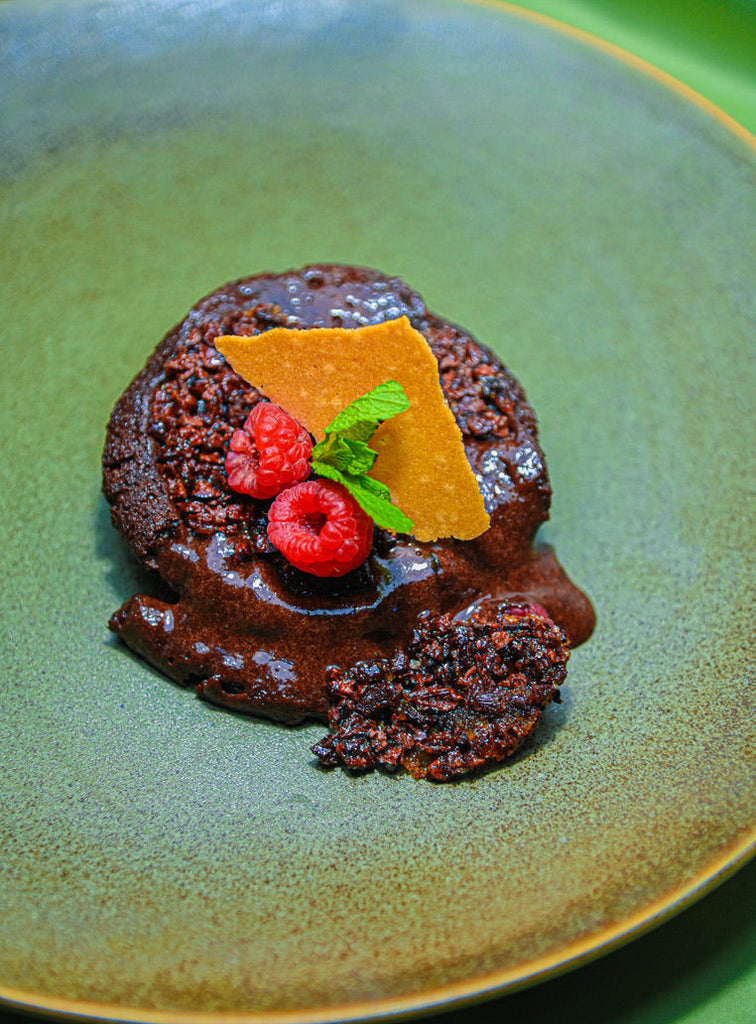
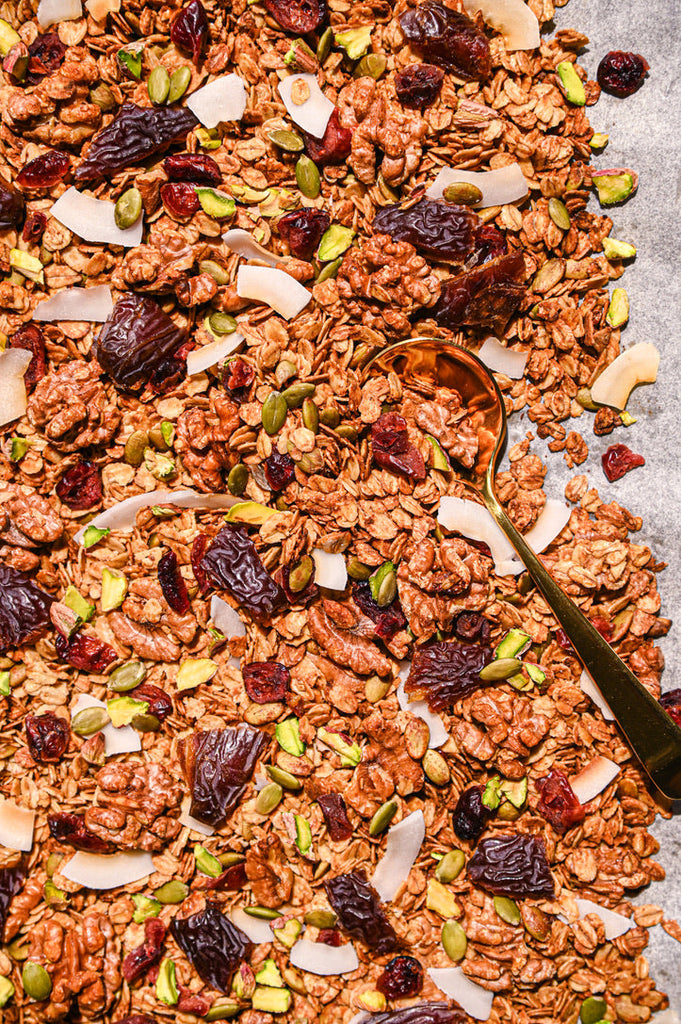
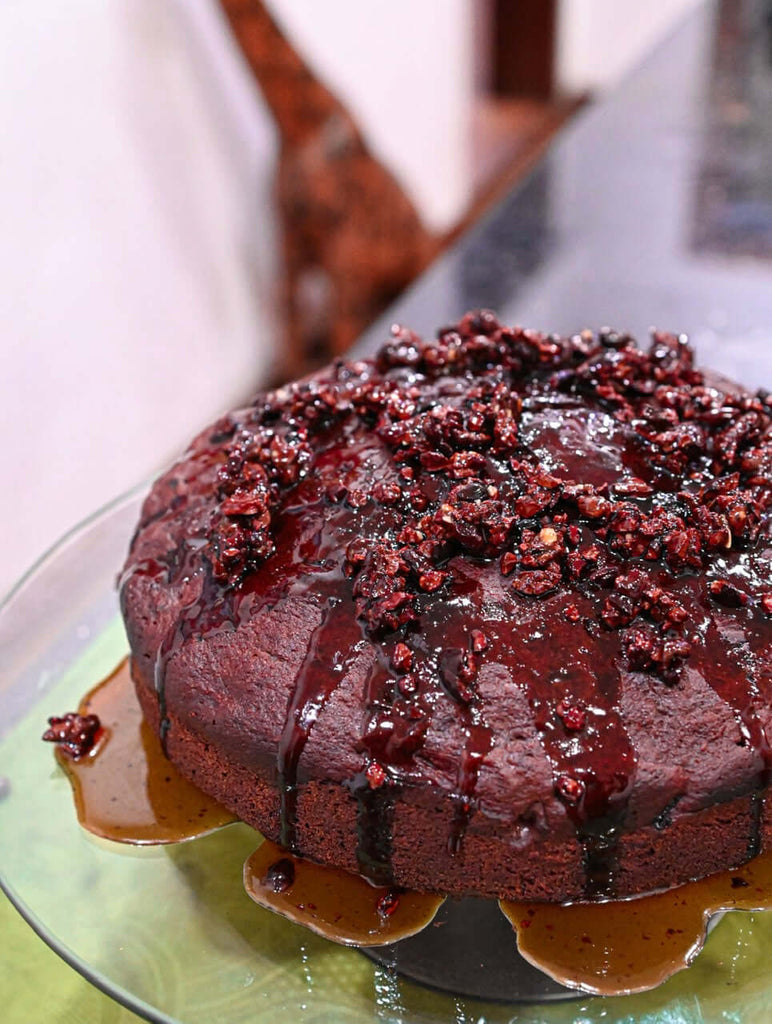
添加到早餐麦片和冰沙或装饰您的酸奶和圣代。
OWORUM, GHANA

A Century Of Stewardship
For over a century, our farm partner's land has been cultivated across generations. On the banks of the Suhurum River, cocoa trees are nourished naturally throughout the seasons without the need for irrigation. No pumps, no systems, just a river that has always been there, and a family that has always known how to work with it.

Beneath the Forest Canopy
Cocoa trees thrive here as part of a diverse agroforestry system, growing as an under-storey forest tree alongside mangoes, plantains, cassava, sugarcane, alligator pepper and beneath a canopy of coconut palms & indigenous hardwood species such as Odum and Ofram.

A Soil That Breathes
The earth here is nourished entirely naturally ~ poultry manure, composted cow dung, decomposed cacao & coconut husks and fallen leaf litter. Cacao husks are returned to the land after every harvest, left to break down slowly over the course of a year. Cow dung is composted for at least three months before it ever touches the soil.

Heap Fermentation
Flavour is shaped long before the beans are roasted. Freshly harvested cacao beans are traditionally heap-fermented under banana or plantain leaves for several days before being slowly sun-dried. This patient process develops the cacao's rich complexity & depth. The dried beans are gently crushed into nibs, dehusked and sorted by hand.
Explore Our Recipes